Menu
×
   ❮     
HTML CSS JAVASCRIPT SQL PYTHON JAVA PHP HOW TO W3.CSS C C++ C# BOOTSTRAP REACT MYSQL JQUERY EXCEL XML DJANGO NUMPY PANDAS NODEJS DSA TYPESCRIPT ANGULAR ANGULARJS GIT POSTGRESQL MONGODB ASP AI R GO KOTLIN SWIFT SASS VUE GEN AI SCIPY AWS CYBERSECURITY DATA SCIENCE INTRO TO PROGRAMMING INTRO TO HTML & CSS BASH RUST TOOLS

Basic JavaScript

JS Tutorial JS Introduction JS Where To JS Output

JS Syntax

JS Syntax JS Statements JS Comments JS Variables JS Let JS Const JS Types

JS Operators

JS Operators JS Arithmetic JS Assignment JS Comparisons JS Conditional JS If JS If Else JS Ternary JS Switch JS Booleans JS Logical

JS Loops

JS Loops JS Loop for JS Loop while JS Break JS Continue JS Control Flow

JS Strings

JS Strings JS String Templates JS String Methods JS String Search JS String Reference

JS Numbers

JS Numbers JS Number Methods JS Number Properties JS Number Reference JS Bitwise JS BigInt

JS Functions

Function Path Function Intro Function Invocation Function Parameters Function Returns Function Arguments Function Expressions Function Arrow Function Quiz

JS Objects

Object Path Object Intro Object Properties Object Methods Object this Object Display Object Constructors

JS Scope

JS Scope JS Code Blocks JS Hoisting JS Strict Mode

JS Dates

JS Dates JS Date Formats JS Date Get JS Date Set JS Date Methods

JS Arrays

JS Arrays JS Array Methods JS Array Search JS Array Sort JS Array Iterations JS Array Reference JS Array Const

JS Sets

JS Sets JS Set Methods JS Set Logic JS Set WeakSet JS Set Reference

JS Maps

JS Maps JS Map Methods JS Map WeakMap JS Map Reference

JS Iterations

JS Loops JS Iterables JS Iterators JS Generators

JS Math

JS Math JS Math Reference JS Math Random

JS RexExp

JS RegExp JS RegExp Flags JS RegExp Classes JS RegExp Metachars JS RegExp Assertions JS RegExp Quantifiers JS RegExp Patterns JS RegExp Objects JS RegExp Methods

JS Data Types

JS Destructuring JS Data Types JS Primitive Data JS Object Types JS typeof JS toString JS Type Conversion

JS Errors

JS Errors Intro JS Errors Silent JS Error Statements JS Error Object

JS Debugging

Debugging Intro Debugging Console Debugging Breakpoints Debugging Errors Debugging Async Debugging Reference

JS Conventions

JS Style Guide JS Best Practices JS Mistakes JS Performance

JS References

JS Statements JS Reserved Keywords JS Operators JS Precedence

JS Versions

JS 2026 JS 2025 JS 2024 JS 2023 JS 2022 JS 2021 JS 2020 JS 2019 JS 2018 JS 2017 JS 2016 JS Versions JS 2015 (ES6) JS 2009 (ES5) JS 1999 (ES3) JS IE / Edge JS History

JS HTML

JS HTML DOM JS Events JS Projects New

JS Advanced

JS Temporal  New JS Functions JS Objects JS Classes JS Asynchronous JS Modules JS Meta & Proxy JS Typed Arrays JS DOM Navigation JS Windows JS Web APIs JS AJAX JS JSON JS jQuery JS Graphics JS Examples JS Reference


HTML DOM API

Application Programming Interface

The DOM API (Application Programming Interface) is a set of Methods and Properties that allow JavaScript to change the content, structure, and style of any HTML elements.
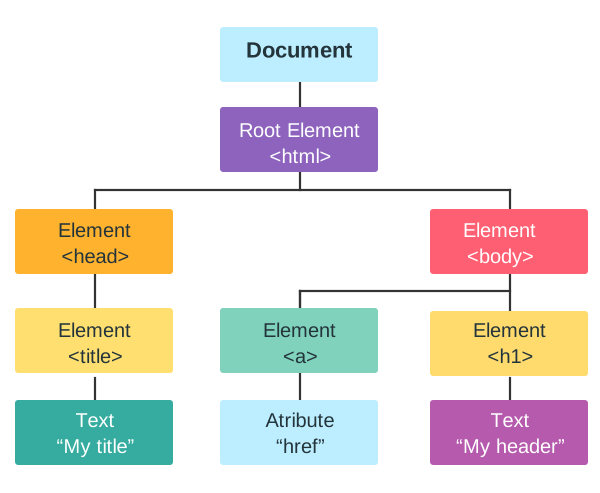
DOM HTML tree

An API Method is an Action that you can do on an HTML element.

An API Property is a Value that you can access on an HTML element.

Example

<html>
<body>

<p id="demo"></p>

<script>
// Access a paragraph Element
const myPara = document.getElementById("demo");

// Change the content of the Element
myPara.innerHTML = "Hello World!";
</script>

</body>
</html>
Try it Yourself »

Example Explained

document is the HTML document.

getElementById() is a document method.

myPara = getElementById("demo") retrieves the "demo" element.

innerHTML is an element property.

myPara.innerHTML = "Hello World!" changes the property.


HTML DOM API Abilities

The DOM API provides us with the ability to:

  • Find and select elements
  • Change element content and attributes
  • Add, remove, or modify elements
  • Change CSS styles
  • Add event listeners to react to user input

JavaScript is the Language

The DOM API is a standard for how to get, change, add, or delete HTML DOM elements.

JavaScript is the language used in browsers to access the DOM through the API.


API Methods and Properties

Developers use global objects like document and window as entry points to any API.

If you want to access any element in an HTML page, you always start with accessing the document object. The document object represents your web page.

To manipulate HTML with JavaScript, you first need to select an element.

Below are some examples of how you can use the document object to access HTML:


Selecting HTML Elements

Method Description
document.getElementById(id) Find an element by element id
document.getElementsByTagName(name) Find elements by tag name
document.getElementsByClassName(name) Find elements by class name
document.querySelector(selector)Find the first element that matches a CSS selector
document.querySelectorAll(selector)Find all elements that match a CSS selector

Note

The document object is the owner of all other objects in your web page.


Accessing Element Content

PropertyDescription
element.innerHTMLThe HTML content of an element
element.textContentThe text content of an element

Accessing Element Attributes

PropertyDescription
element.attributeChange the attribute value of an HTML element
element.style.propertyThe style of an HTML element

Changing Element Attributes

MethodDescription
element.setAttribute()Create or set a new attribute

Manipulating Structure

MethodDescription
document.createElement()Creates a new HTML element
document.removeChild()Remove an HTML element
document.appendChild()Add an HTML element
document.replaceChild()Replace an HTML element

Adding Event Handlers

Method Description
document.getElementById(id).onclick = function(){code} Adding event handler code to an onclick event


×

Contact Sales

If you want to use W3Schools services as an educational institution, team or enterprise, send us an e-mail:
sales@w3schools.com

Report Error

If you want to report an error, or if you want to make a suggestion, send us an e-mail:
help@w3schools.com

W3Schools is optimized for learning and training. Examples might be simplified to improve reading and learning. Tutorials, references, and examples are constantly reviewed to avoid errors, but we cannot warrant full correctness of all content. While using W3Schools, you agree to have read and accepted our terms of use, cookies and privacy policy.

Copyright 1999-2026 by Refsnes Data. All Rights Reserved. W3Schools is Powered by W3.CSS.

-->